
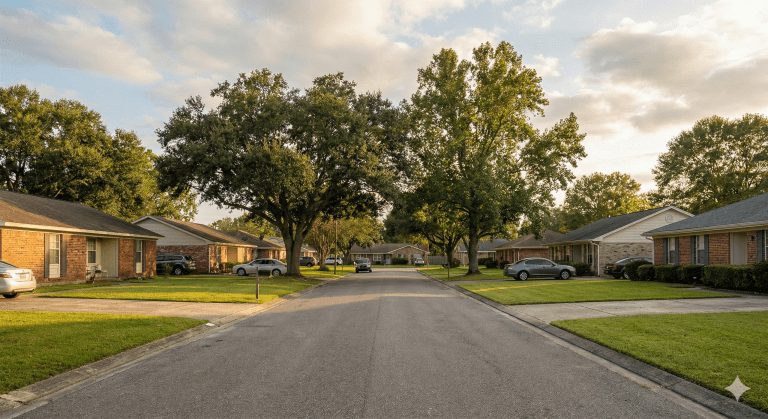
Wind mitigation inspection in LaPlace
Located in the narrow geographic “funnel” between Lake Pontchartrain and the Mississippi River, LaPlace is a high-pressure zone for wind and rain. This compression effect forces tropical systems into a concentrated corridor, increasing the intensity of the wind-driven rain.
LaPlace
LaPlace serves as the gateway to the River Parishes, positioned on the east bank of the Mississippi River where the “German Coast” heritage meets modern industrial vitality. Proudly carrying the title of “Andouille Capital of the World,” the community is famous for its artisanal smokehouses—like Jacob’s and Bailey’s—where the local French-German influence perfected the spicy, pecan-wood-smoked sausage that defines Louisiana’s gumbo and jambalaya. This culinary tradition is celebrated every October at the Andouille Festival, a massive community gathering that has been the heartbeat of the town since 1972.
Beyond the smokehouses, LaPlace is a site of immense historical significance. It is home to the 1811 Kid Ory Historic House (formerly Woodland Plantation), where the 1811 German Coast Uprising began—the largest slave revolt in American history. This landmark now serves as an anchor for the 1811 Slave Revolt Trail, providing a powerful look into the region’s resilient past.
For those drawn to the outdoors, LaPlace offers a unique landscape shaped by water. The Bonnet Carré Spillway provides a vast recreational playground for biking, fishing, and boating, while the nearby Manchac Swamp offers a pristine look at Louisiana’s cypress-filled wetlands. Whether you are dining with a view of Lake Pontchartrain at Frenier Landing or exploring the historic “River Road,” LaPlace offers a lifestyle rooted in deep tradition and a fierce sense of community. As a central hub connecting New Orleans and Baton Rouge, it remains one of the most resilient and culturally rich communities in South Louisiana.