
Enhance Home Durability and Earn Insurance Savings With Wind Mitigation Upgrades
Explore actionable steps to bolster your home’s resistance to wind damage from extreme weather events.
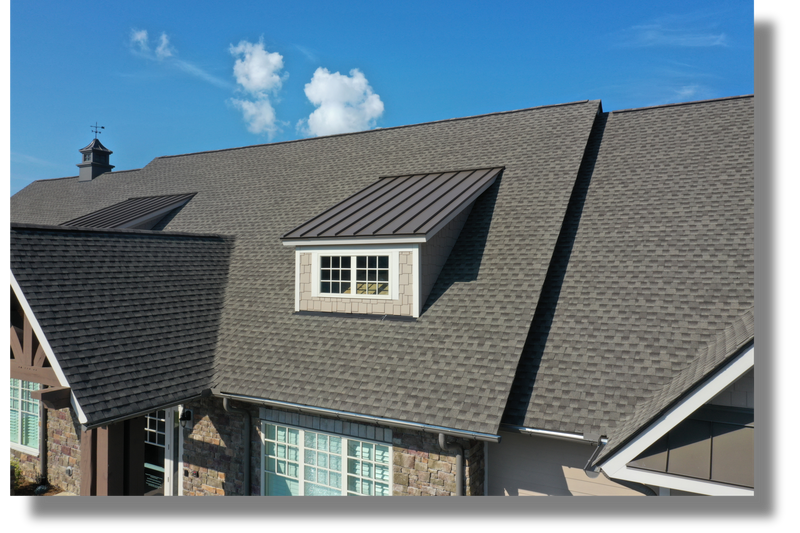
Roof: Covering
Upgrading your roof covering is a proactive step towards enhancing your home’s durability and compliance with current safety standards. The roof covering is the outermost layer that directly faces environmental elements. A well-maintained and compliant roof covering serves as the first line of defense against weather, particularly strong winds and heavy rain. By selecting suitable materials and ensuring they are properly installed and maintained, you not only elevate your home’s protection but also align it with the latest safety and resilience guidelines. This improvement is integral to ensuring long-term performance and peace of mind during diverse weather conditions.
Acceptable (commonly used) Roof Covering materials are:
- Architectural asphalt shingles, preferably class 4 impact rated and should be installed with 6 nails per shingle.
- Metal roofs (preferably standing seam roof)
- Approved synthetic material roofs
- Natural slate
Roof: Secondary Water Resistance Features
Incorporating secondary water resistance for your roof is an essential component of safeguarding your home against water intrusion. This feature acts as an additional layer of protection beneath the primary roofing material. In the event that the primary layer is compromised during a storm, this secondary barrier helps prevent water from seeping into the roof decking and into the interior of your home. Typically achieved through the use of self-adhering membranes or specialized coatings applied directly to the roof deck, this method effectively seals the roof from water penetration. Implementing secondary water resistance is a proactive approach to enhance your roof’s integrity and ensure long-term protection against weather-related water damage.
Acceptable Secondary Water Resistance methods are:
(any one of these methods is acceptable)
- Ice and Water shield (covering all roof areas, not just in valleys and around penetrations)
- Seam tape on all roof decking seams
- Double layer of synthetic underlayment (or 19″ overlapping synthetic underlayment nailed at 12″ grid patterns)
- Closed cell spray foam adhesive on all decking seams and rafter connections inside of attic

Roof: Decking
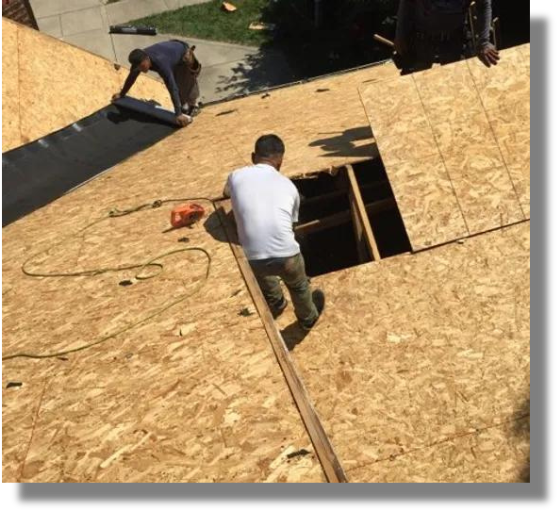
The thickness and uplift resistance of the roof decking are critical factors in fortifying your home against strong winds. Roof decking options, mainly plywood, oriented strand board (OSB), and dimensional lumber, each offer unique benefits in these aspects. Plywood decking, available in various thicknesses, is renowned for its balance of flexibility and strength, providing excellent resistance to wind uplift. Thicker plywood typically translates to greater resilience. OSB, with its engineered layers, also offers considerable uplift resistance, especially when used in adequate thicknesses. Dimensional lumber decking, a more traditional choice, when used in sufficient thickness, contributes significantly to the roof’s ability to withstand high winds. The choice of material and its thickness are crucial in ensuring that your roof decking not only meets safety standards but also provides robust protection against the challenges posed by extreme weather conditions.
Roof Decking should be 1/2″ or thicker structural sheathing (OSB or Plywood).
Where dimensional lumber is present, it is highly recommended to cover with 1/2″ or thicker structural sheathing.
H-Clip connectors should also be used at sheathing connections.
Roof: Decking Attachment
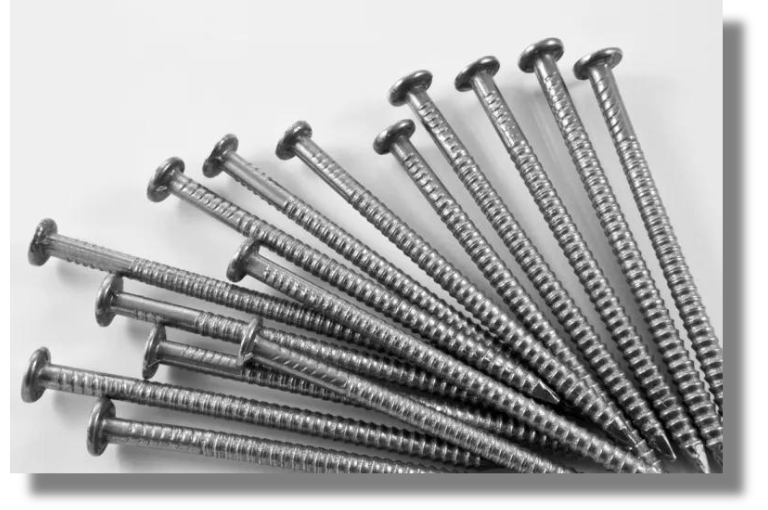
Proper roof decking attachment is vital for wind resistance, with emphasis on nail size, length, spacing, and the use of ring shank nails. Longer nails ensure deeper penetration and stronger hold, essential in high wind areas. Closer spacing of the nails enhances the decking’s stability. Ring shank nails, known for their ridged design, provide superior grip and are highly effective against wind uplift. By focusing on these key aspects, the attachment method significantly boosts your roof’s durability and resilience against severe weather.
Roof Decking Attachment should be a minimum of 8d nails (2.5” long). If sheathing is thicker than 5/8″, it is recommended to use 10d nails (3.0” long) to ensure proper nail depth into the rafter. Ring shank nails are highly recommended. Nails should be installed at 4″-6″ intervals in every rafter. (4″ spacing is preferred, however, 6″ spacing is still acceptable)
Roof: Rafter-to-Wall Connection
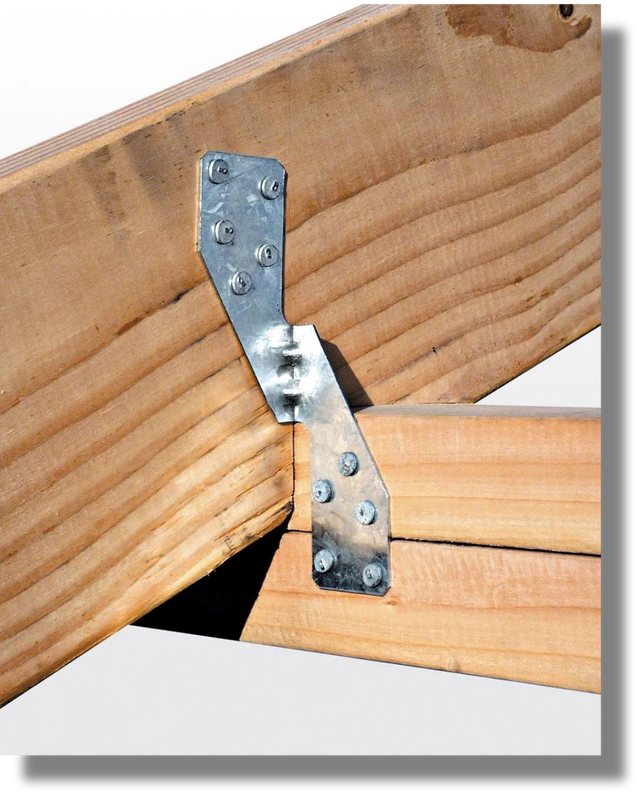
Strengthening the rafter to wall connection is crucial for enhancing your home’s wind resistance. This connection, where the roof rafters meet the top of the wall, is a key point in maintaining the structural integrity of your roof during high winds. By reinforcing this junction with metal connectors or straps, the rafters are securely anchored to the wall. This reinforcement prevents the roof from lifting or shifting during strong wind events. Ensuring a robust rafter to wall connection is a vital step in fortifying your home against severe weather, contributing significantly to the overall safety and resilience of the structure.
There are 3 commonly used “hurricane strap” types in use. Clips, Single Wraps and Double Wraps. Of these, Clips offer the lowest form of protection, while double wraps offer the greatest form of protection.
Wall: Opening Protection (Windows and Doors)
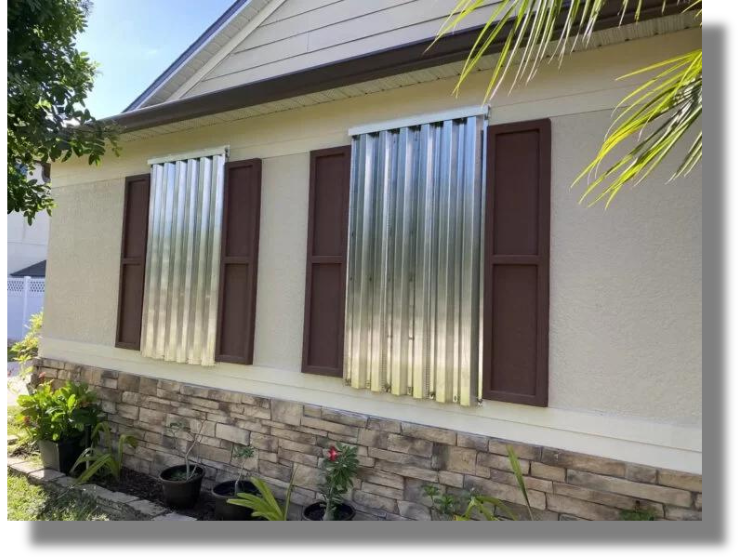
Protecting window and door openings is essential in safeguarding your home against wind-borne debris and strong winds. These openings are vulnerable points where high winds can cause significant damage. By installing impact-resistant windows and doors, or adding hurricane rated protective coverings like shutters or impact-resistant glazing, you can greatly reduce the risk of breakage and intrusion by debris. This not only prevents potential damage to the interior of your home but also maintains the structural integrity of these openings during extreme weather events. Implementing these protective measures is a proactive approach to enhancing your home’s resilience and ensuring the safety of its occupants.
External Window and Door Protection can come in a wide variety of styles and materials. It is highly recommended that all windows and doors have some type of Hurricane Rated protection present.
Wall: Opening Protection (Garage Doors)
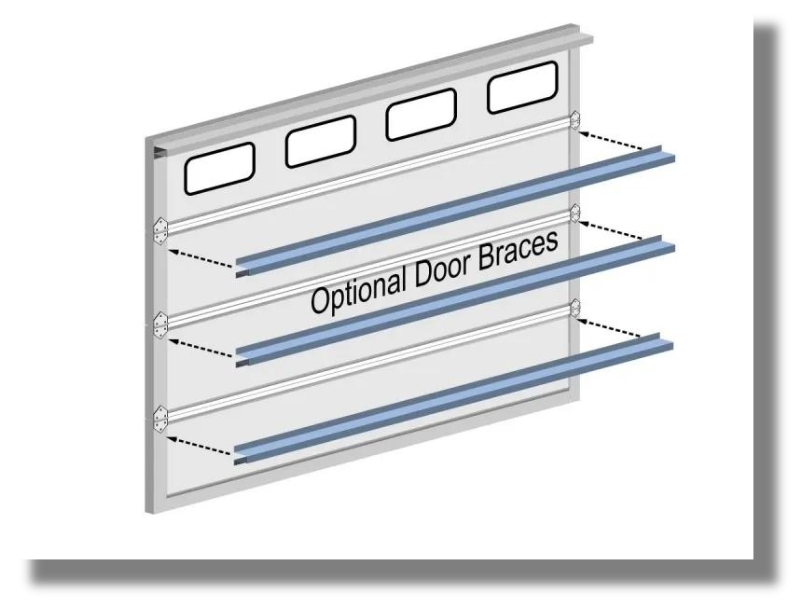
Installing a hurricane rated garage door is a key step in reinforcing your home against high winds. Garage doors are often the largest and most vulnerable openings in a home, susceptible to wind pressure and impact. By installing specially rated garage doors, you can significantly strengthen the garage door’s resistance to wind forces. These doors contain braces that reinforce the door from the inside, preventing it from buckling or detaching during strong wind events. Upgrading to a hurricane rated garage door is an effective measure to enhance the safety and resilience of your home, particularly in areas prone to severe weather.
Garage Doors should be rated for hurricane wind resistance and may or may not feature large metal “struts” to strengthen door from caving in under high wind pressures.
Wall: Gable Bracing
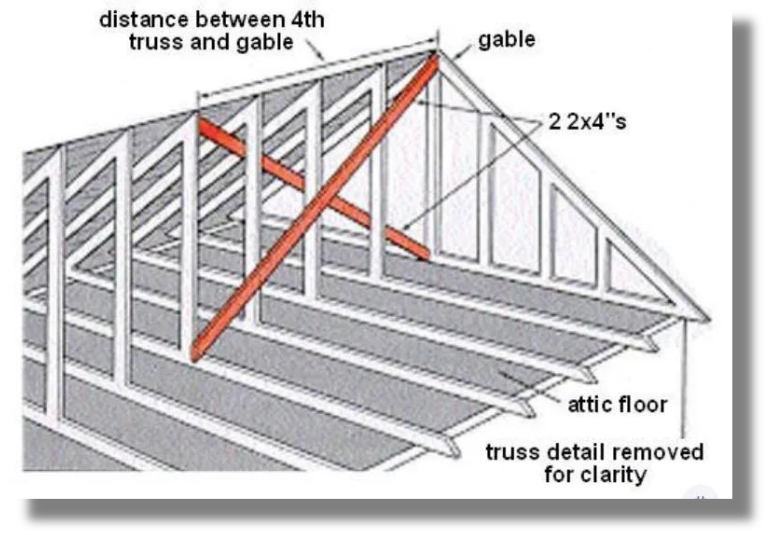
Gable end bracing is an important aspect of strengthening your home against high winds. Gable ends, the triangular portion of the wall at the roof’s edge, are particularly vulnerable to wind pressure. Proper bracing reinforces these areas, preventing them from buckling under force. This involves installing braces – typically made of wood or metal – diagonally between the gable end and the roof framing. This added support not only enhances the structural integrity of the roof but also significantly reduces the risk of damage during strong wind events, ensuring a more resilient and secure home environment.
Gable Bracing should be one of many styles of bracing, which include, but are not limted to:
- Strong Backs
- Diagonal Bracing
- X Bracing
Wall: Foundation Attachment
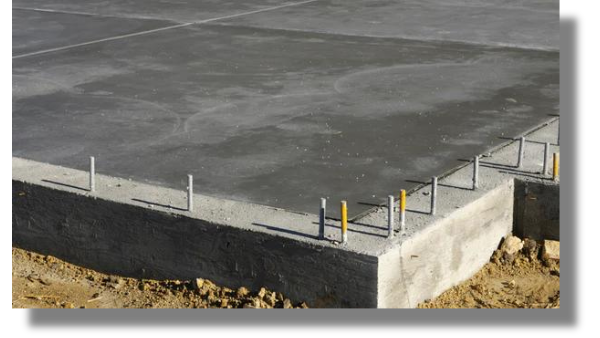
For homes built after 2007, wall-to-foundation attachments should meet Louisiana State Uniform Building Code standards. For older homes, consider renovations to meet these requirements, especially for raised homes that allow under-access.
Wall-To-Foundation Attachment should meet LSUCC Building Code requirements.